Monday, August 1, 2011

Forensic sculptor/ North Philly native Frank Bender dies of mesothelioma

Frank Bender called himself "The Recomposer of the Decomposed".
Philadelphia and the crime-solving community lost a legend last Thursday when Frank Bender died of pleural mesothelioma in his home. He is survived by his two daughters, three grandchildren, and sister. He was predeceased by his wife Janice, who died of cancer in 2010. The New York Times and Philadelphia Inquirer both ran obituaries for the late, great forensic sculptor.

Talking about his mesothelioma--the aggressive asbestos-related cancer of the lining of the lungs and other internal organs--Frank Bender once told a reporter, "It's interesting that I have cancer, because I have always said through the years that catching fugitives and identifying people takes a piece of cancer out of our society." 


Mr. Bender believed his exposure to asbestos happened in the engine room of the Navy ship where he and the rest of the crew worked. Mesothelioma rates are high among naval veterans, due to the large amounts of asbestos used to insulate the boilers, engines, and other high-temperature areas of military vessels


Even during the last months of his life, Frank Bender was committed to solving crime. His last sculpture, The Woman in the Woods, is a hand-sculpted bust of a woman (estimated age 25 to 40) whose body was found in the woods near Easton in December of 2001. For more about The Woman in the Woods, visit http://coldcase.squarespace.com/ to learn more about this unsolved crime.


The Woman in the Woods--Frank's last case. Her death remains unsolved.

Though his busts of unidentified bodies have helped many families find closure, Frank Bender's most famous sculpture was of a suspected murderer who had eluded the police for eighteen years. When America's Most Wanted asked Mr. Bender to create a time-adjusted sculpture of John List, a New Jersey man accused of killing his wife and family in 1971, a woman watching the show in Virginia recognized the bust as her neighbor, "Bob Clark." Mr. List was subsequently arrested and convicted of the murders.

"In many ways, Frank's bust of John List really launched America's Most Wanted into a national force for catching fugitives," AMW host John Walsh said in 2009. "Whenever I get the tough cases, I call Frank."


If you want to learn more about Mr. Bender and his colleagues' pro-bono work in The Vidocq Society, visit http://www.vidocq.org/index.html

Thursday, July 14, 2011

Asbestos and hazmat removal in the nick of time in Camden

The former Concord Chemical Inc. (Photo courtesy of DVRBS)

A little late with this one, but you'll have to forgive me--I don't look across the Delaware often enough, and sometimes I'm a little late getting the Jersey news. And what a story this one is: a possible arsonist on the loose in Camden, plus 2010 budget cutbacks in the fire department (always a good idea, shrinking the service that keeps us all from catching fire), bringing on some federal involvement in the form of the ATF.

Oh, and one more thing: a near-miss on chemical explosions and potentially fatal asbestos exposure for the firefighters sent to put out the six-alarm blaze. You see what you miss when you turn your back on Jersey?
(Image courtesy of DVRBS)


Asbestos and "400 containers of hazardous, flammable chemicals" on the scene were declared completely removed by the EPA in March, after a six month cleaning process. Spokesman for the [Camden] Mayor's Office Robert Corrales said: "It could have been really bad." 


Corrales was referring to the hundred of barrels of flammable chemicals and asbestos which, though undeniably fireproof, would have been spread throughout the neighborhood, contaminating a community already devastated by two previous fires set this month.


The Concord Chemical factory had interesting history. Historians at the Delaware Valley Rhythm & Blues Society gave a brief (but very informative) summary of the now-burnt property's history:


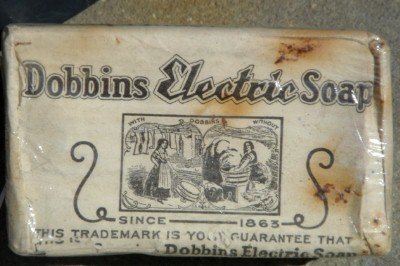
The Dobbins Soap Manufacturing Company, founded in 1863, had a factory in Philadelphia at Germantown Ave, Susquehanna Ave, and the southwest corner of Marshall Street which they had remodeled in 1864 and 1865. Owned by the Cragin family, by 1887 the firm had built a factory on the southwest corner of 17th Street and Federal Street, where they operated until 1934. George Cragin was the superintendent from 1887 through 1906, Louis Bresset had the position in 1914, and Alex Macfeat had it in 1924.
The plant was acquired by the Iowa Soap Company, which operated the facility into the late 1940s. At some point after 1959 the Concord Chemical Company moved its operations from 205 South 2nd Street to this building, which is still into the late-2000s. The building was then abandoned, and an EPA team did a clean-up in 2010.
On June 19, 2011 the old soap factory, known roughly 50 years as the Concord Chemical factory, was destroyed by fire.
One product that used to be made at 17th & Federal (Photo from DVRBS)
Great stuff. (The history, not the fire.) The idea of an arsonist on the loose in the Philly area really creeps me out. Behavioral scientists say that bed-wetting, arson, and cruelty to animals are three traits that most serial killers display in their youth. Not saying the arsonist or arsonists are serial killers, but I would not be surprised if this person/ group of people were responsible for some other crimes.


Well that's all for today in asbestos/ arson news. Let's hope it stays that way, for the safety of the people of Camden and Philadelphia. Much love to the Camden Fire Department. I'm glad they were not exposed to asbestos as so many firefighters have been in the past, and even more than the asbestos, I am glad the chemicals were removed. Fires are dangerous enough without gigantic explosions.


A Camden firefighter puts out the six-alarm blaze. (Photo courtesy of DVRBS)
  

Wednesday, July 13, 2011

Metal scrappers get asbestos exposure at former Clemente Middle School


Juliana Reyes painted a grim picture of the former Roberto Clemente Middle School at Fifth and Luzerne:

Gregory Betancourt perches on an overturned love seat and peers through a stripped window frame into a darkened six-story building.He sees a pile of filthy clothes, a mattress and a lot of darkness. Discarded tires and empty soda bottles clutter the concrete around him. A wooden plank on the ground nearby - what used to be the top of a school desk, maybe - is still legible: "Property of the Philadelphia School District - 1988," it reads.


The old Roberto Clemente Middle School closed in 1994, and relocated to West Erie and North Front. Before it was a middle school named for the Puerto Rican baseball great, it was an Apex Hosiery factory. Reyes says students at the original Clemente called their school "The Pantyhose Factory."

(Note: Do not Google the phrase "pantyhose factory" unless you want to be inundated with pornography. For more information about the old pantyhose factory, read this heart-breaking article from 1954 about Apex in Philadelphia, and this one from 1937.)


After its first two lives as a pantyhose factory and a middle school, Reyes reports that the building became the Greater Philadelphia Book Bank, "a pet project of businessman Robert Graves. The Book Bank, a place for teachers to get books for free, shut down in 2007. Graves said the School District couldn't afford to keep the building open anymore."

Clemente is now abandoned, as it has been for four years, leaving it open for scrapper seeking copper wire and other building materials to sell. A recent article in Philadelphia Weekly by Michael Alan Goldberg explored the dangers unleashed by scrappers tearing up the walls:
The presence of asbestos comes as no surprise to 49-year-old Jose Lisojo, owner of JL Custom Shop on Rising Sun Avenue, which faces the back of the Clemente building. Standing outside his garage, Lisojo and his friend Ray—a carpenter who says he’s certified to remove asbestos—point to pipe wrappings inside the building that they’re certain contain asbestos. Both mention the white dust that comes out of the property every day. 
“[Scrappers are] poisoning the air around here,” Lisojo complains. He says he’s called the city’s 311 hotline repeatedly to report asbestos contamination, but claims no one takes him seriously. “One time the guy told me, ‘Don’t worry—you won’t get sick for 20 or 30 years,’” says Lisojo, shaking his head.

Philadelphia School District Spokeswoman Elizabeth Childs said the district's Facilities Management Division monitors the building daily, and cleans the site monthly. It also "routinely welds doors shut and closes openings in windows on the ground level," but somehow, scrappers still get in.
 
Philadelphia Health Department spokesman Jeff Moran told Philly.com that the district has been cited by the city's Air Management Services: "To comply, the district must either seal the building or remove the asbestos. The district will work with an asbestos abatement contractor as well as a vacant property specialist to seal the property, Moran said."

What do you say, readers? Do you see an asbestos abatement project happening anytime soon at the old Roberto Clemente? Or will it take some kind of tragedy to motivate the underfunded city government to make this dangerous asbestos den a priority? Call me a pessimist, but I'm betting on the latter.

Tuesday, July 5, 2011

McDonald Elementary will keep name and location, and lose the asbestos


Warminster's McDonald Elementary will keep its name and its location on Street Road and Reeves Lane in Warminster. Everything else—asbestos included—must go. Montgomery News' Natalya Bucuy reports that the new McDonald Elementary (plans for the new school shown above) will retain only its name and address as the school begins its new stage in a modern building's life cycle: asbestos abatement, demolition, and reconstruction.

The school's construction project is planned to begin shortly and will continue through the end of 2012. An earlier
article about the fate of Warminter's elementary schools in The Intelligencer placed the new school's opening somewhere in early 2013, though the new article provides no updated estimate.

The soon-to-begin construction project and others are part of a plan to streamline public education in the Bucks County and Montgomery County region. Bucuy writes that “the new McDonald Elementary, along with the renovated Willow Dale Elementary School and the new Davis Elementary School, will replace the district’s current six elementary schools by consolidating them into three.”

In the same meeting in which these terms for the new schools were established, officials approved the closing Alta S. Leary Elementary School in Warminster effective this September. Any Alta S. Leary grads among us, readers? Feel free to share some fond memories in the comment section.

And to the kids and parents of Warminster: congratulations! No asbestos exposure for you. Now if we could just get around to doing this in all Philly public schools, we'd be set. 

Thursday, June 9, 2011

Ambler asbestos factory, closed in the 80's, finally going green


The former Nicolet Industries' asbestos factory is going green, over two decades after the Ambler asbestos factory shut down. The Inquirer reported yesterday that, thanks to 2.5 million dollar loan from the Metropolitan Caucus' EnergyWorks program, developers can afford to move forward with the $14.7 million dollar project to convert the sites of the former Keasbey & Mattison Boiler House and two adjacent properties into state-of-the-art, eco-friendly multi-purpose properties.

Montgomery County Commissioners Chairman James R. Murphy said in a statement: "Redevelopment of the Ambler Boiler House will convert this blighted and environmentally challenged property into a vibrant part of the local economy and spur others to invest in Ambler."

The development team heading the conversion of the former asbestos factory have kept the familiar facade and removed asbestos and other hazards. Their focus on green redevelopment is admirable:
Earlier this year, [Summit Realty Advisors] removed all asbestos contamination, including portions of the roof and a 20,000-gallon fuel tank buried under the building.
The new space, which will maintain the structure's distinctive redbrick facade and smokestack, is expected to seek certification from the Leadership in Energy and Environmental Design [LEED] program, which offers an internationally recognized set of criteria recognizing eco-friendly construction.
Developers plan to install a geothermal well for heating and cooling, photovoltaic panels on the roof, and a system to capture storm-water runoff.

The Ambler Boiler House has come a long way since the 1960s:

For those of you too young to remember, these are some of the asbestos products formerly manufactured at the Ambler Boiler House:

We have already lived through the economic affects of factory closings, and we have been living with their absence for decades. A whole generation exists that never saw what Philadelphia was like when there were enough jobs to go around. But what they have seen are the closed factories full of asbestos and other hazmats. 

The young people do not face asbestos exposure in the factory as their parents and grandparents did, but they do face it if they wander too close to forbidden zones. Telling a kid to keep out of a place is one surefire way to pique their curiosity, and "Keep Out" signs don't ensure community safety the way asbestos abatement and, even better, decontamination and redevelopment of contaminated sites does.

Of course, 14.7 million is something most communities can't just pull out of a hat. It took nine years for the developers to get the necessary funds. 

I'd be interested to hear from former employees of the Ambler Boiler House--what was it like then? How many people, if any, have developed mesothelioma and asbestosis? Do you expect good results from the redevelopment? Ambler residents: have previous redevelopment projects like the one on Butler been successful, in your opinion?

For my part, I'm cautiously hopeful that green business initiatives like this will bring back some of the industry of the past without its industrial diseases.

Monday, May 30, 2011

Memorial Day message from Philly service members here and overseas


If you have the day off (one of the many gifts of freedom we have, thanks to the servicemen and women of the United States), I'm sure you are already thankful to the men and women that protect and serve our country. But seriously, Memorial Day is about remembering the sacrifices that those in military have made for the sake of us all. And where better than the birthplace of our nation to celebrate our veterans and enlisted men and women?

Fox29 brings some Memorial Day messages from two Marines overseas: Master Sergeant Will T. Mobley of Philadelphia and Corporal Robert Sitler of Bucks County.

MSgt. Mobley and Cpl. Sitler had the same message: gratitude and remembrance."Take time to say thank you to somebody who is either with us or gave the ultimate sacrifice for this country," MSgt. Will T. Mobley III said. MSgt. Mobley continued:

"Memorial Day isn't just about sales and just about barbecues. It's about remembering what someone gave for this country so that we can practice the freedoms that we practice. It really touches me as a veteran because, one, I'm over here, but, two, I come from a family that all served. Every male in my family has served for this country. So, Memorial Day, we've been celebrating it for a long time, and now my kids can keep that tradition up. So, while you're about to have some of that good barbecue back at home in the park, take a moment to bow your head and say thank you to somebody that gave the ultimate sacrifice."

Cpl. Sitler told the reporter:

"Ma'am, I believe it's very important that everybody at home takes a moment of silence and appreciates the fact, you know, some of our brothers have fallen in defending our great nation."


Parades, picnics, barbecues and block parties are fantastic, and it wouldn't be Memorial Day without them. But it's also important that we remember the ongoing problems our veterans face, from dealing with medical ailments suffered while in combat, asbestos diseases from exposure during military service, or dealing with PTSD. Heroism isn't a picnic, and we need to remember veterans (and everyone who is currently serving) year round, not just when we get a day off.

Why bring this up on a blog about mesothelioma? Well, many veterans (especially those who served from the 1940s to the 1970s) were exposed to asbestos during their service, and years later, that exposure sometimes comes back in the form of mesothelioma. Steve McQueen is one famous example of a US Marine whose time cleaning asbestos insulation from pipes on a ship resulted in mesothelioma, the often-fatal cancer of the lining of the lungs.

So many sacrifices are made for our sake, and some, like the deaths of those who develop mesothelioma, are all the more tragic because they are unnecessary. No one had to be exposed to asbestos; they just were.

This Memorial Day, thank a veteran. And if you are a veteran, make sure you ask your doctor about military asbestos exposure, especially if you experience asbestosis symptoms or mesothelioma symptoms. Early detection is important in fighting mesothelioma and other asbestos-related diseases. Have a happy holiday and take care.

Thursday, May 26, 2011

EPA completes asbestos removal at abandoned factory in Camden

(1700 Federal Street in Camden)

Camden, once an industrial force like the City of Brotherly Love across the Delaware, has fallen on hard times since industry kept moving South. What's been left over is A) the workforce that once made the factories run, and B) the factories that once filled the nation with hats, bandsaws, pianos, and a million other things that have since been "outsourced." Camden still has Campbell's and we still have Kraft, among others, but it's not news that there are abandoned factories up and down the arteries of our cities.

Some of the dangers posed by abandoned factories are their potential to injure trespassers, to house feral animals (hello, raccoons!), or to leach toxic substances left over from the days when the factory used substances such as asbestos, which most did. 

The EPA released a report today announcing completion of their asbestos removal and removal of other hazardous materials from the abandoned factory at 1700 Federal Street:

EPA took decisive action to protect members of the community who live in close proximity to this abandoned manufacturing site,” said Judith A. Enck, EPA Regional Administrator. “EPA removed containers of hazardous chemicals and old insulation that contained asbestos. The site is now secure and no longer a threat to people or the environment.”
(1700 Federal's identity in the 1920s and 1930's)

Though we cannot predict the industrial future of Camden and Philly, we can assure a safe present for residents. Thanks to the EPA to looking out for Camden, and here's to continued cleanups of hazmats like asbestos!